High-Impact Results
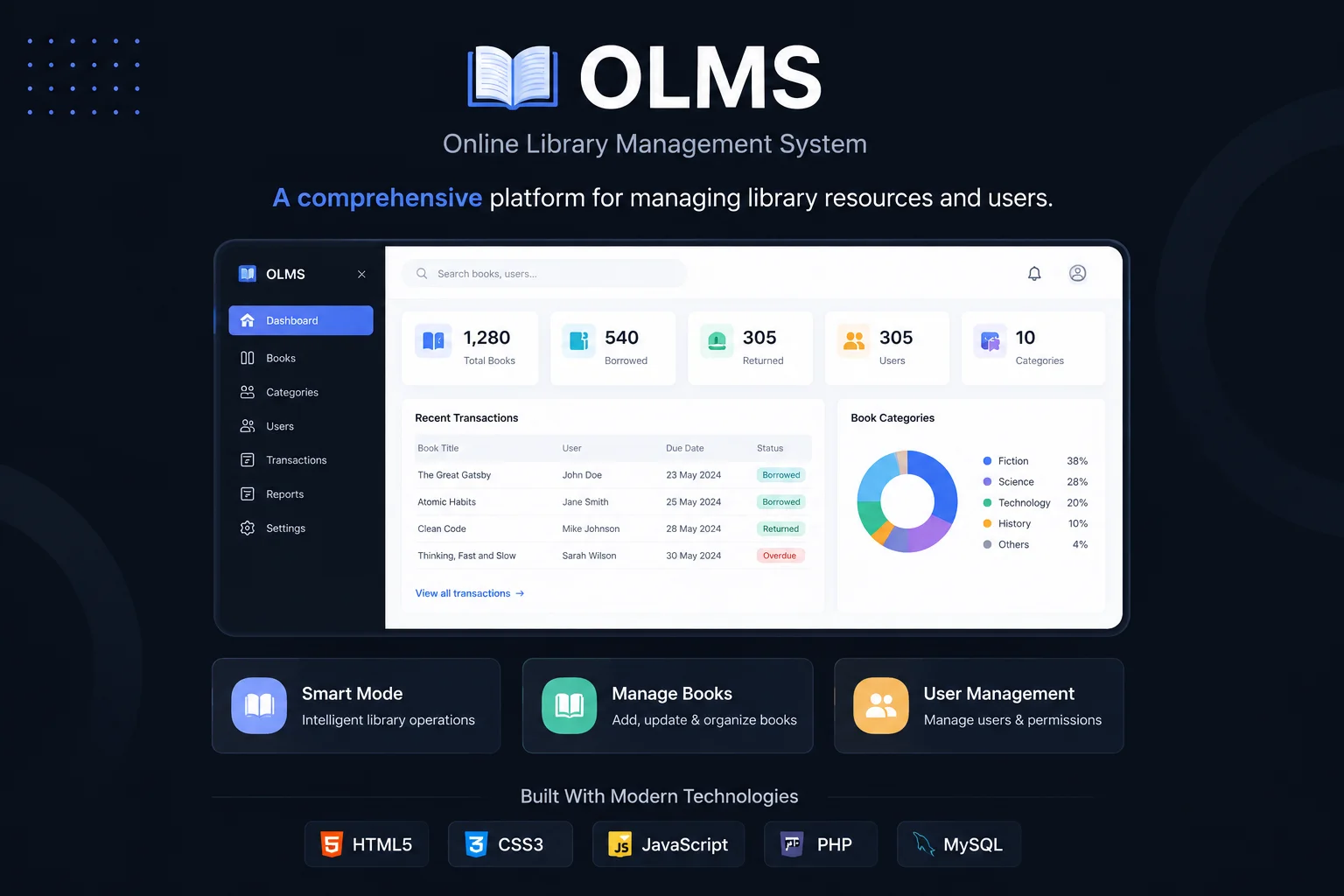
OLMS reduced the time required for asset issue and return cycles by about 40% through automated validation, and improved data integrity by roughly 90% by eliminating redundant manual entry via a centralized relational database architecture. It was also built during a professional internship with a scalable architecture designed to handle high-concurrency requests and multiple administrative roles.
The Challenge #
Institutional libraries often rely on fragmented manual records or legacy systems that lack real-time synchronization. This creates data silos, frequent tracking errors, and high administrative overhead, ultimately degrading the experience for students and staff.
The Solution #
I engineered a comprehensive management ecosystem focused on reliability and role-based operational efficiency. The system implements secure, hierarchical role-based access for Administrators and Members to strengthen security and auditability, includes an automated fine engine that calculates overdue penalties in real time based on configurable institutional policies, and provides unified cataloging through a responsive search and filter experience that surfaces asset availability and status instantly.
The Result #
OLMS demonstrated how professional-grade backend architecture can solve systemic logistical bottlenecks. By replacing manual workflows with automated, data-driven processes, the system provided a blueprint for modernizing institutional resource management.